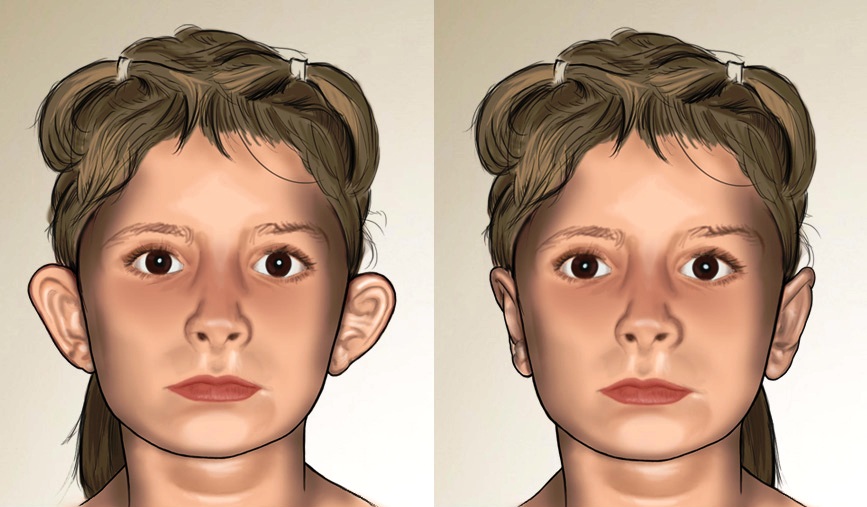
 Prominent ear deformity is a very common deformity with an incidence of approximately 5% in Caucasians. It is inherited and usually occurs as a result of insufficient development of the outermost fold of the ear, which we call the antihelical fold.
Along with the psychological stress, emotional trauma and behavioral problems created in childhood, being constantly mocked in the school environment brings along many problems in terms of behavior. For this reason, surgery to correct prominent ear deformity is a necessary operation for the future mental life of the child patient. When the corrective surgery for prominent ear deformity should be performed depends on the ear development of the patient and the age of starting school. Since the ear completes its development at the age of 6-7, prominent ear surgery can be performed at these ages.
With prominent ear surgery, a new shape is given to the ear cartilages and the new shape is fixed with stitches. When the results of prominent ear surgeries were evaluated in scientific studies, it was found that it did not impair the development of cartilage in a long time. Therefore, there is no harm in doing it at a young age. In prominent ear surgeries, there are two types of techniques in which the cartilage is cut and not cut. It has not been applied much in recent years due to the many complications seen after the surgery performed by cutting the cartilage. They are less risky surgeries that are easier to shape without cutting the cartilage and have a shorter recovery time.
The duration of the operation is approximately 1.5 hours, and the bandages remain for 3-5 days after the operation and are dressed intermittently. In an average of 1 week, the person can return to his normal life. He is only asked to cover his ears for 2-3 months with a soft bandage or bandana while lying down at night. Although it is a simple surgery that is not very difficult, its results are of great importance for the mental health and aesthetic beauty of children and adults.